Learn electronics by building it
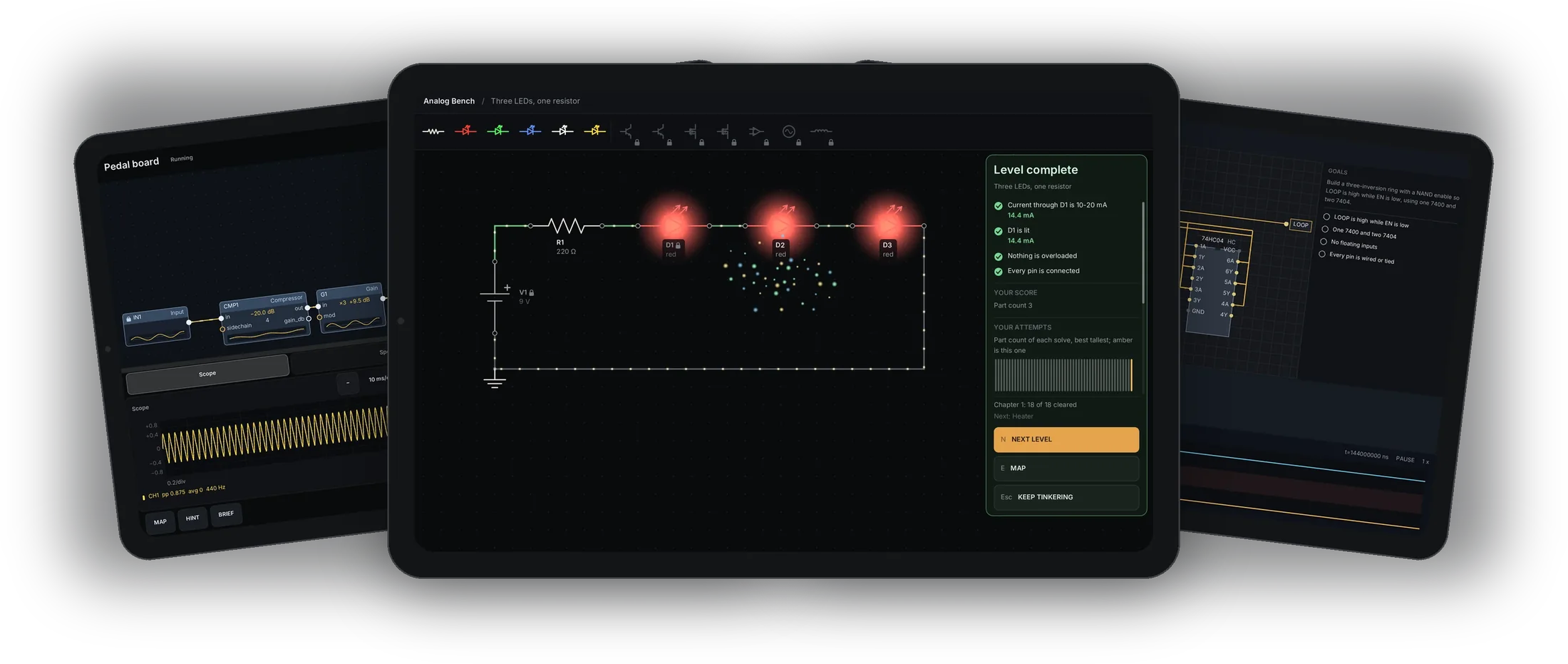
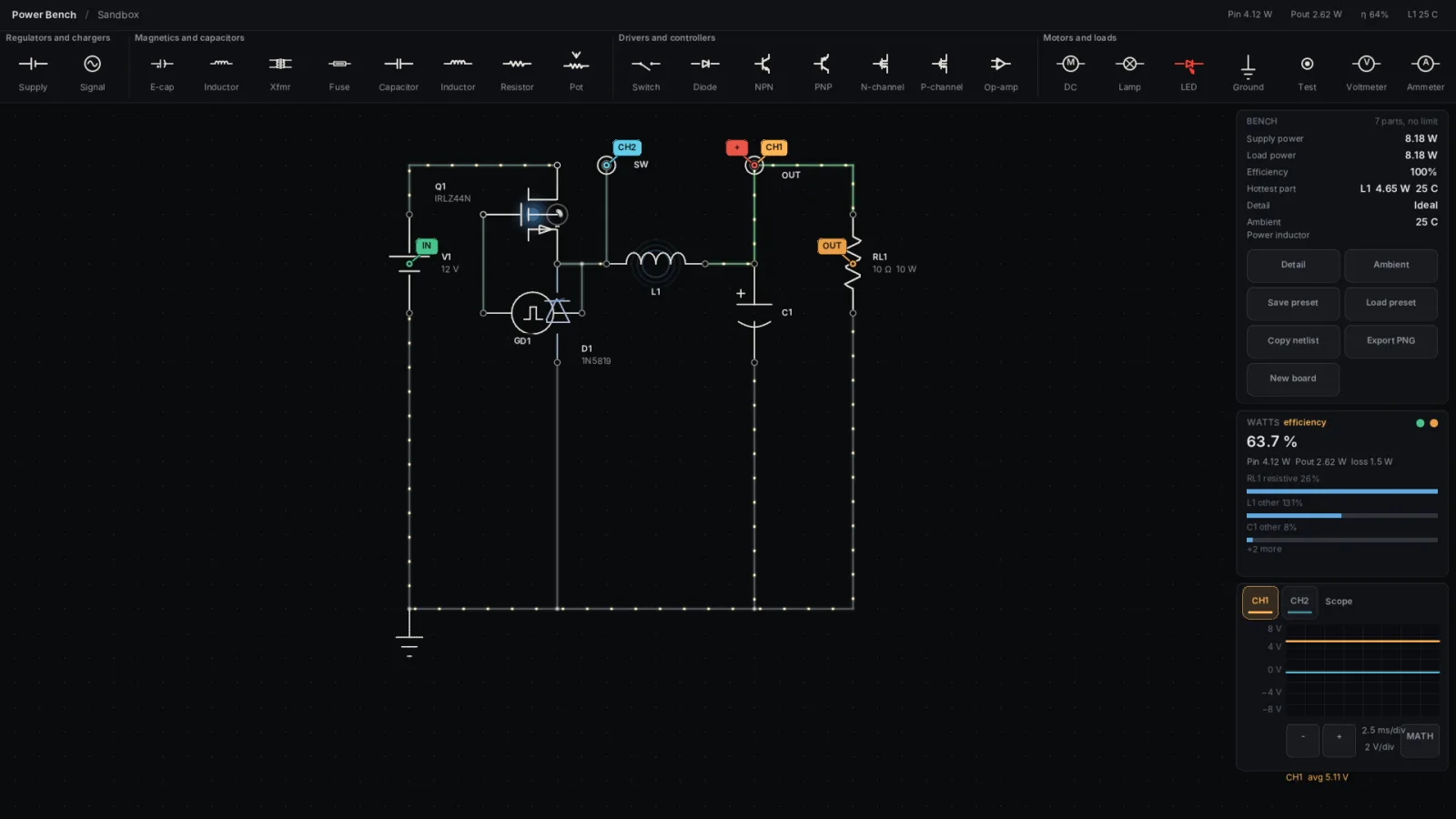
Each Bench game hands you a workbench, a goal and a live simulator. You build. It measures what you built. Nothing passes because it looks right; it passes because it works.
Pick your bench
Three games are coming to iPad first. Each is its own app with its own course, and each starts free.
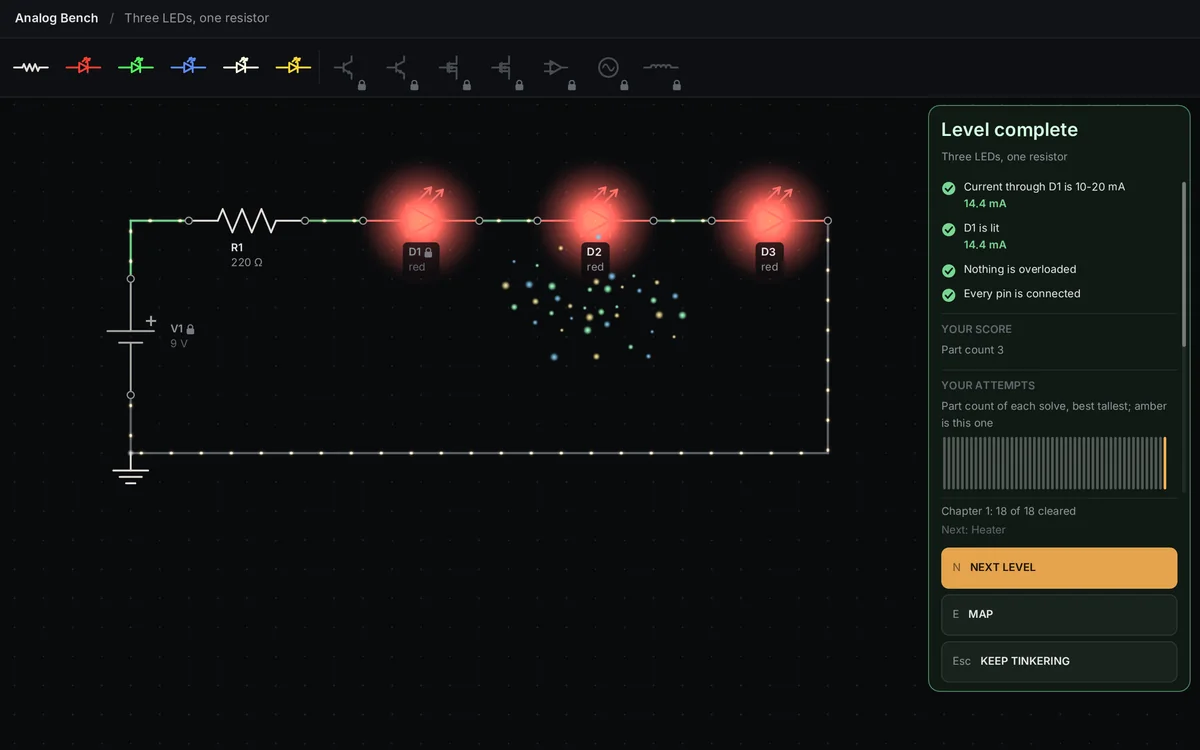
Analog Bench
Resistors, capacitors, diodes, transistors and op-amps on a board where the LED really glows brighter as the current rises. Fifty-five levels, from a first LED to oscillators and a motor driver.
Meet Analog Bench →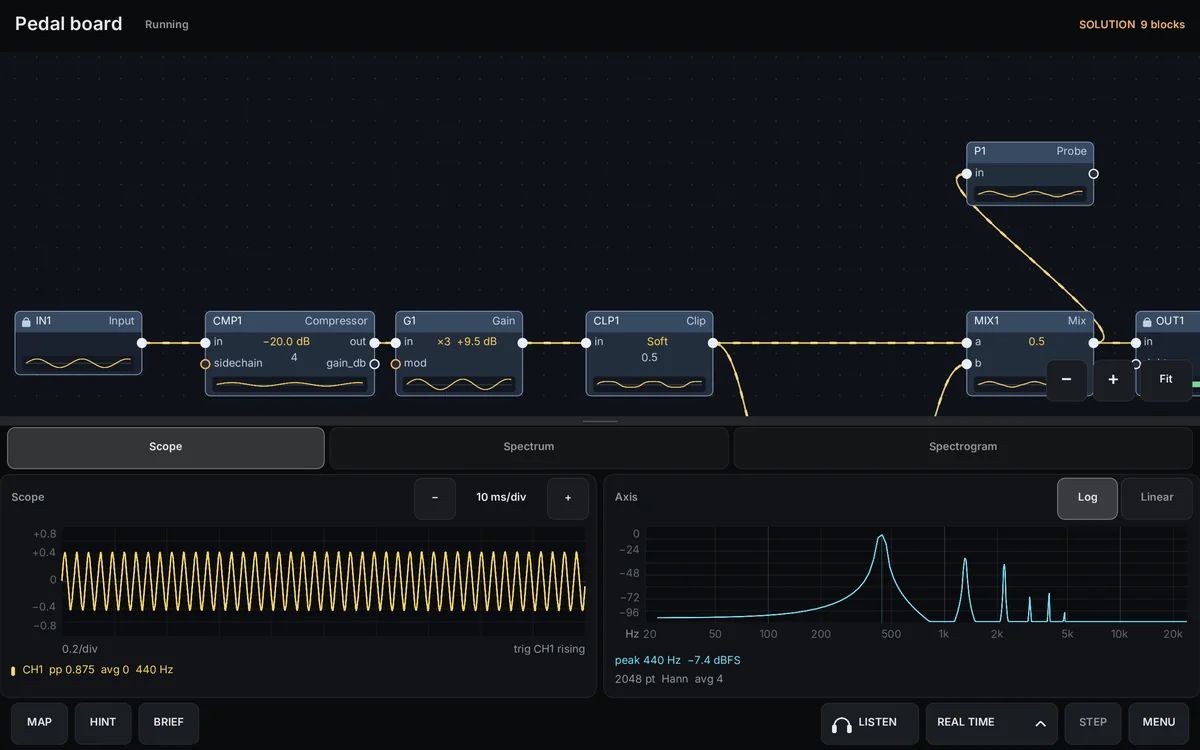
DSP Bench
Wire blocks into a patch and hear it run sample by sample. Sixty-six exercises, from a 440 Hz tone to a pedal board, a plucked string and a vocoder.
Meet DSP Bench →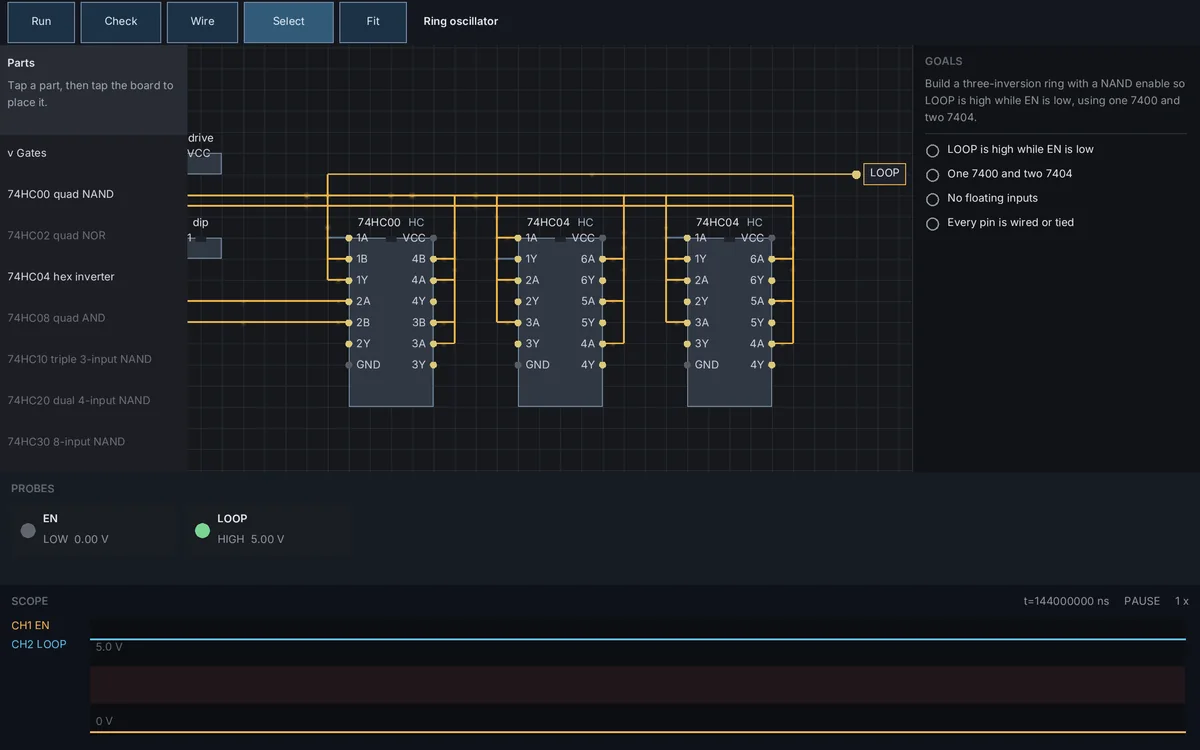
Digital Bench
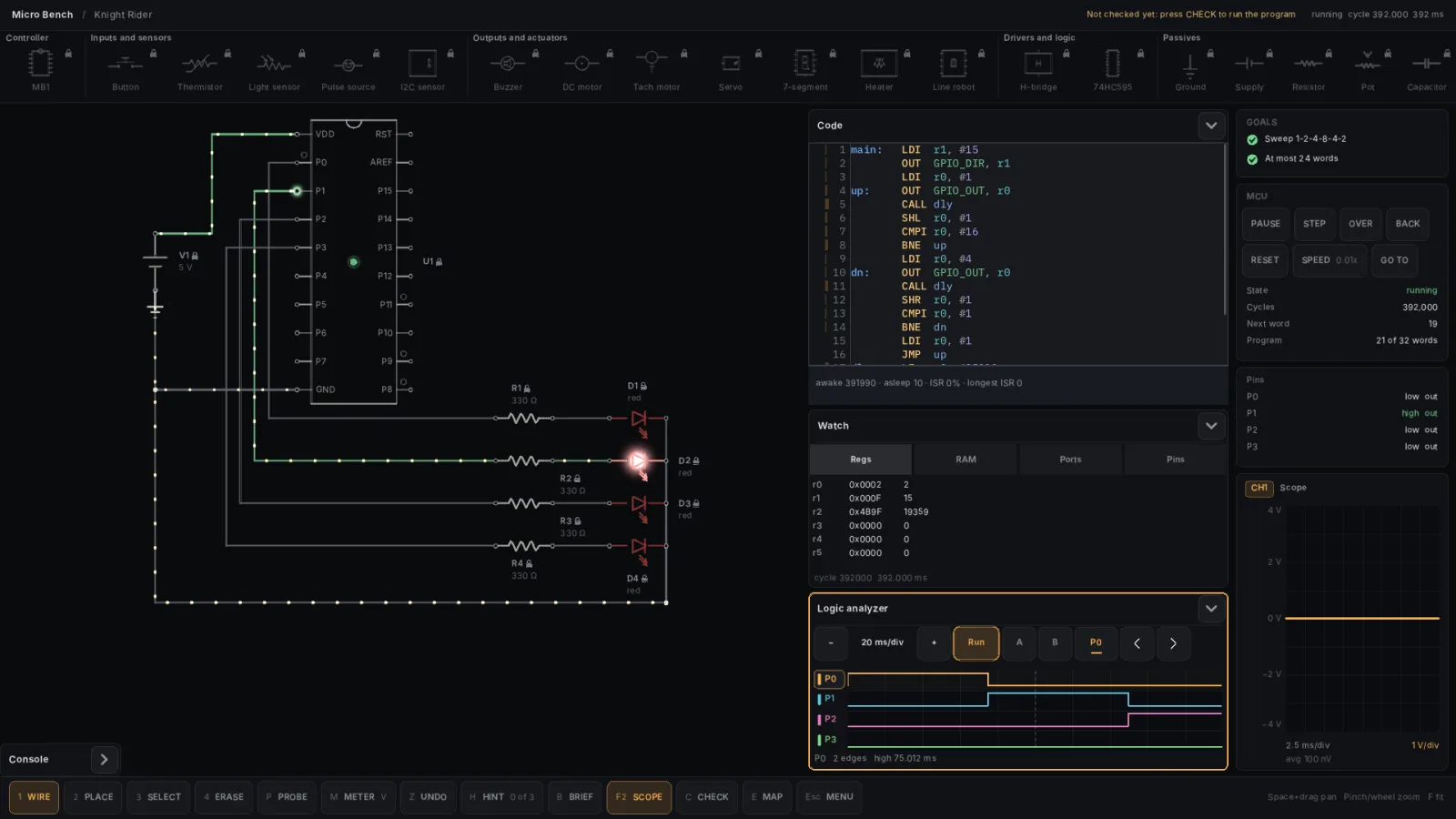
Place real 74HC, 74LS and CD4000 chips, wire the pins and read the nanoseconds they take. Ten chapters, from one inverter to a program running from RAM.
Meet Digital Bench →It teaches first
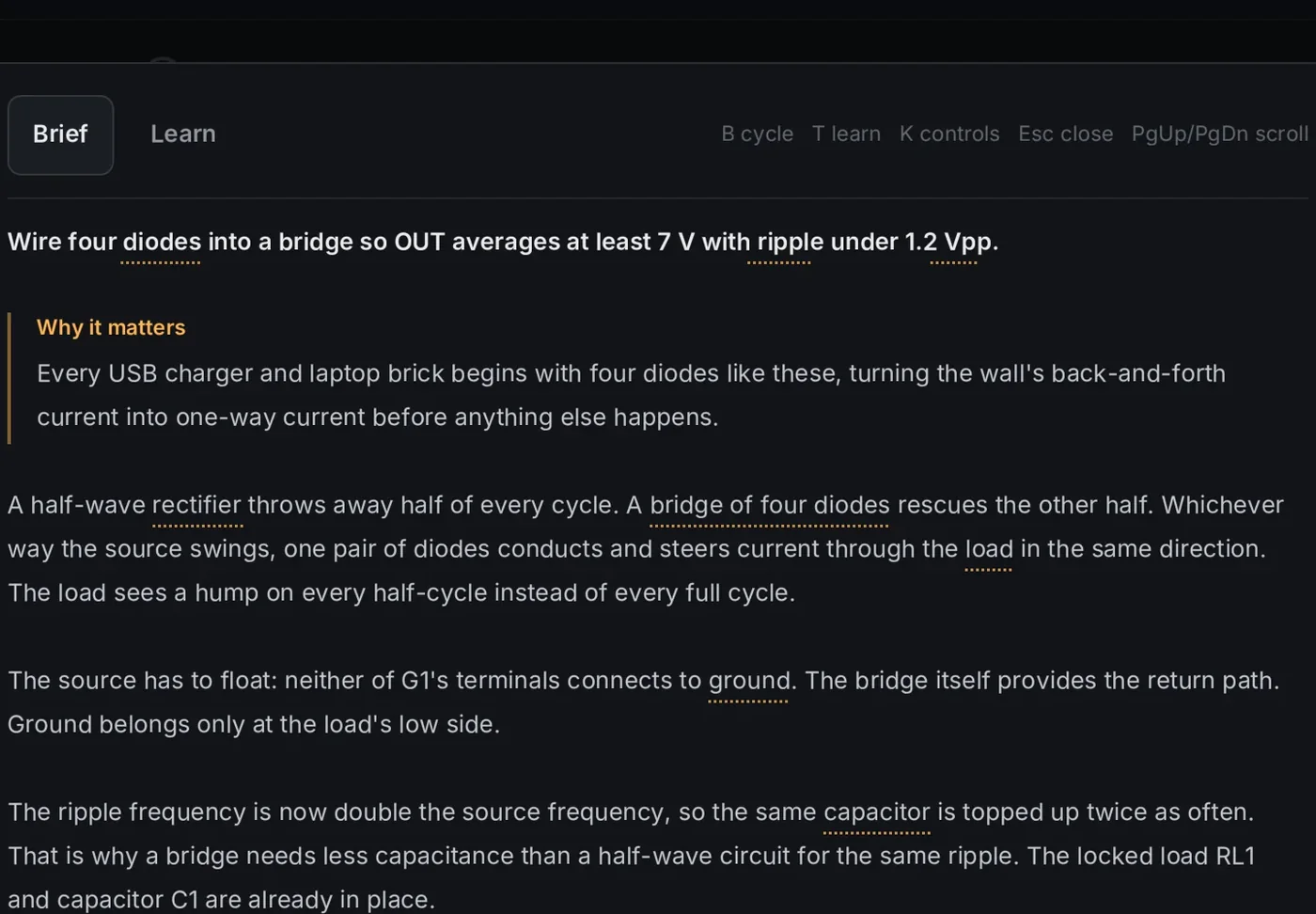
Each level opens with a short brief: why it matters, the one idea, the one formula. A Learn page goes deeper with a worked example and bench tips. Hints come one at a time, a glossary opens any term in place, and every chapter ends with a recap.
Then it grades what you built
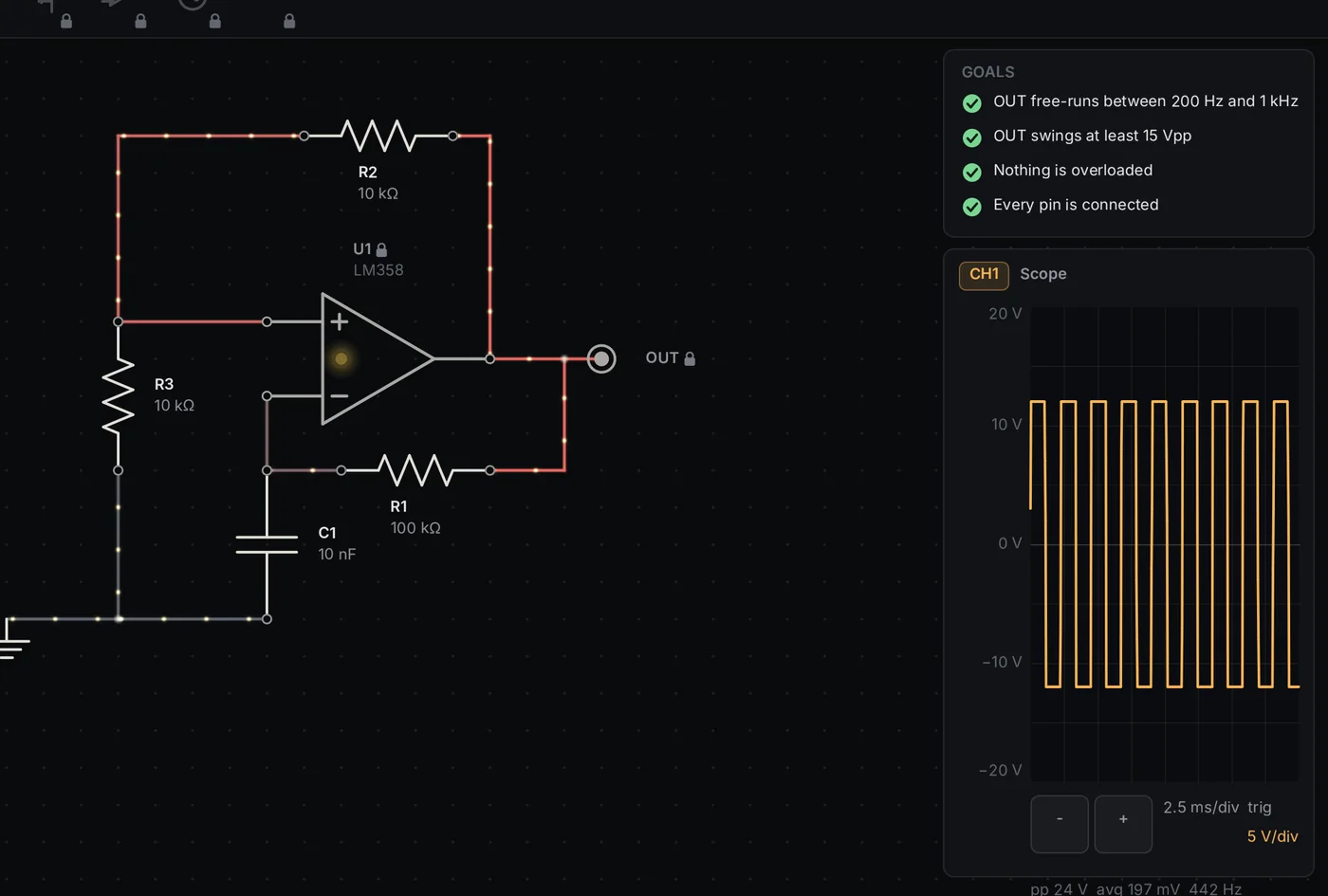
Goals are measurements on your circuit or patch: a current, a frequency, a voltage band, a timing margin. Any design that meets them passes, including the one nobody expected, and the result card shows what it measured beside what it wanted.
Real instruments
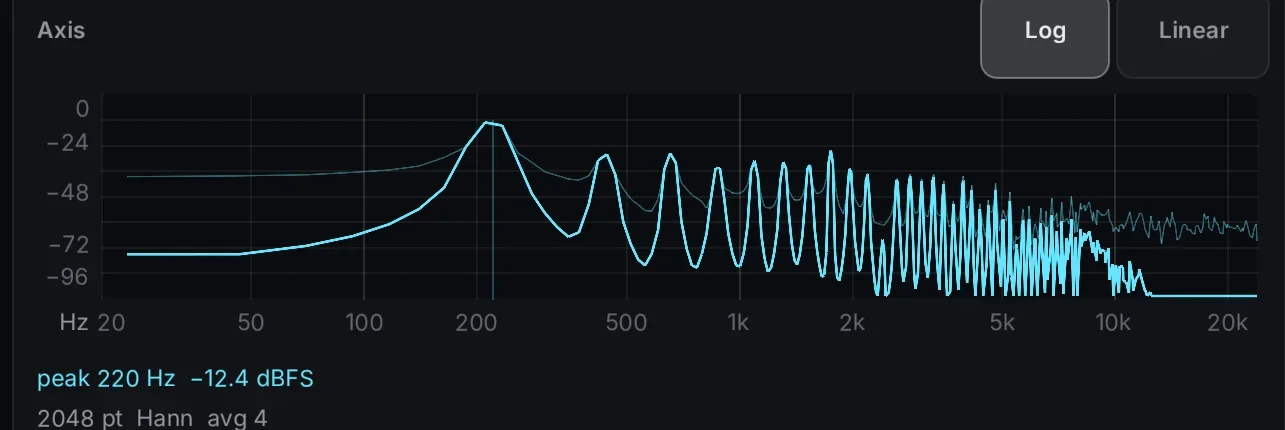
Scopes with up to four probes, a multimeter, a spectrum and a spectrogram, logic probes and a timing view. The same tools you would reach for on a real bench, reading the same numbers.
Free to start, yours for good
In each game the first five levels are free, plus five previews from later chapters, so you can see where the course goes before you pay anything. One purchase unlocks that game's whole course for good, on every iPad signed in to your Apple Account.
No subscription. No ads. No account. Nothing collected.
Coming next
The bench keeps growing. Three more games are on it now.
Support
Questions or ideas: bench [at] zebel.ai. Read the Support page or the Privacy Policy.